
See every customer in the context of their relationships


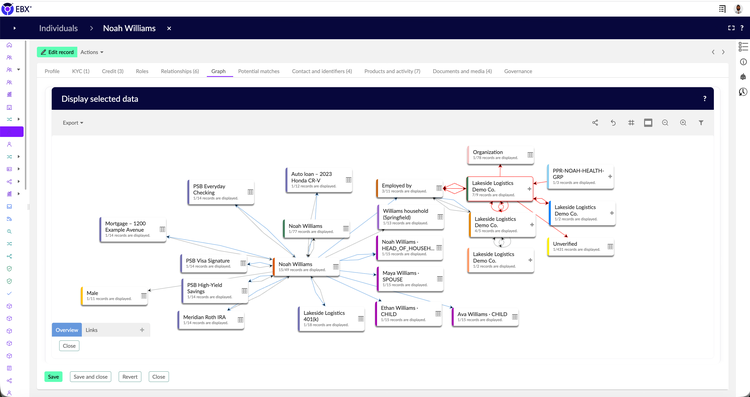
Connect individuals through governed membership
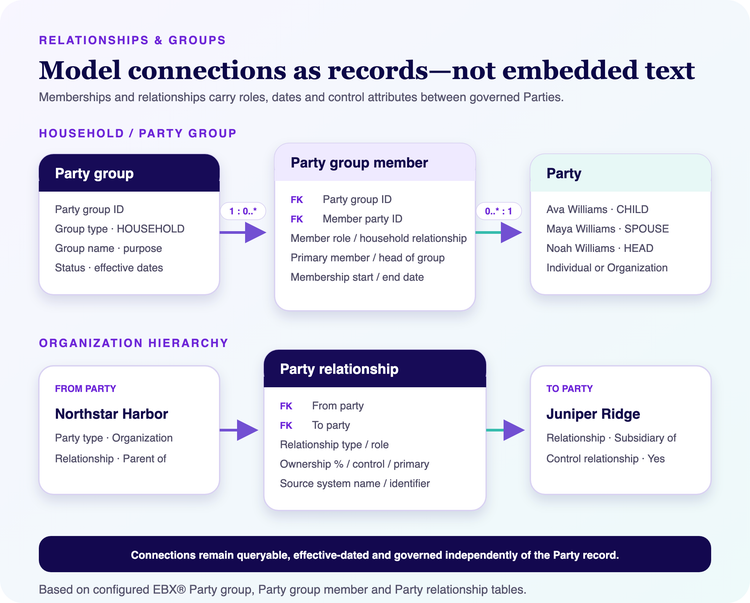
A household is a governed group, not a single merged customer. Each person keeps an individual identity while household membership records describe roles such as spouse, child, dependent or head of household, with status and effective dates.
This supports household service, eligibility, communications and value analysis without erasing individual consent or ownership.
Follow organizations from subsidiary to ultimate parent
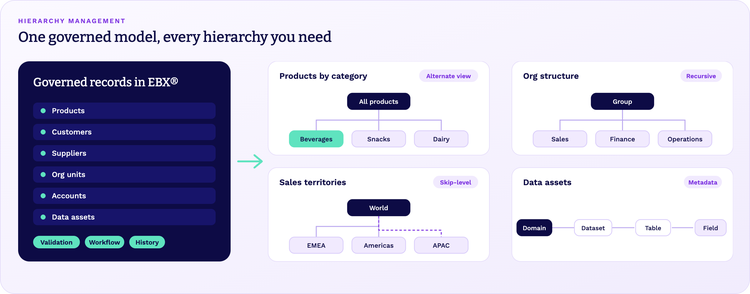
Legal entities, operating companies, branches and ultimate owners should remain distinct organizations connected by governed hierarchy relationships. This supports consolidated exposure, group value, procurement, credit and account planning.
Learn more about hierarchy management.
Show how parties participate
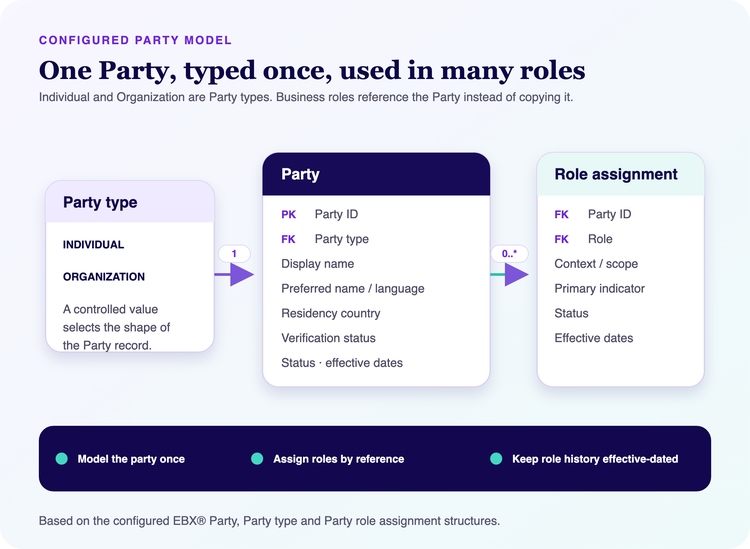
The same person may be a policyholder, beneficiary, buyer, billing contact or signatory. The same organization may be a customer, supplier, partner or counterparty. Model those roles and their links to accounts, contracts and products rather than duplicating the party for each process.
Make relationship evidence traceable
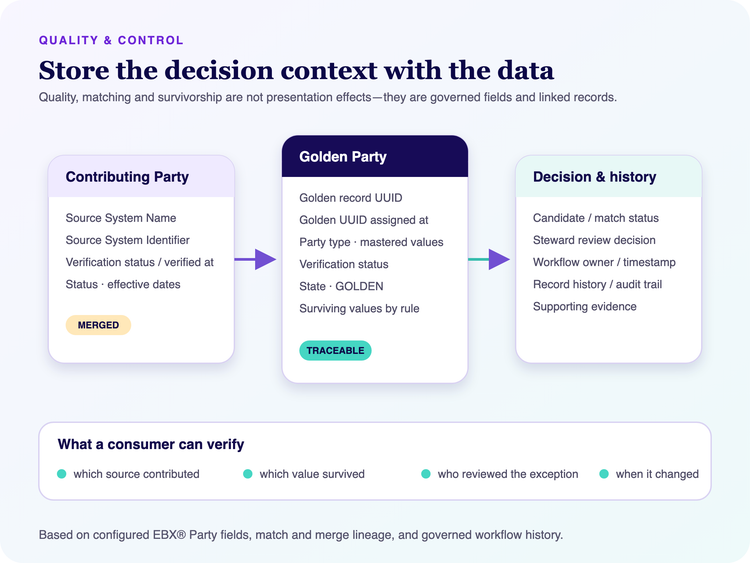
Relationships should include type, direction, effective dates, status, source, ownership and supporting evidence. A hierarchy change or household membership update should follow validation, permissions and history like any other governed customer-data change.
This prevents obsolete structures from silently driving service, risk or reporting.
Deliver the right view to each workflow
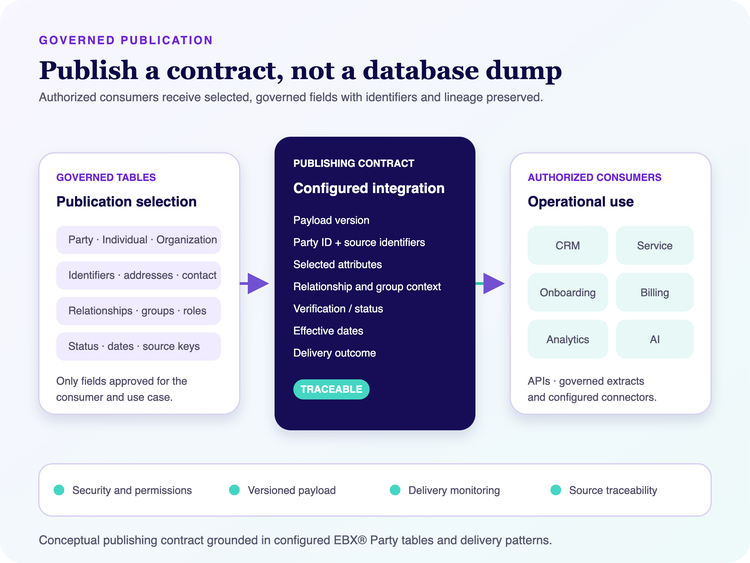
Service teams can understand household context, account teams can see the buying group, risk teams can calculate group exposure, and analytics can aggregate value at the correct level. Published views should expose only the relationships and attributes appropriate to the user and purpose.
See the Customer 360 data model for the underlying entities and governance.
Keep exploring Customer 360
See how the data model, matching and golden records give households and hierarchies a trusted foundation.


Govern customer relationships and hierarchies with EBX®
Connect people, organizations, households, accounts and roles in a traceable Customer 360 foundation.
