
Customer 360 reference architecture


Connect without replacing CRM, billing or service
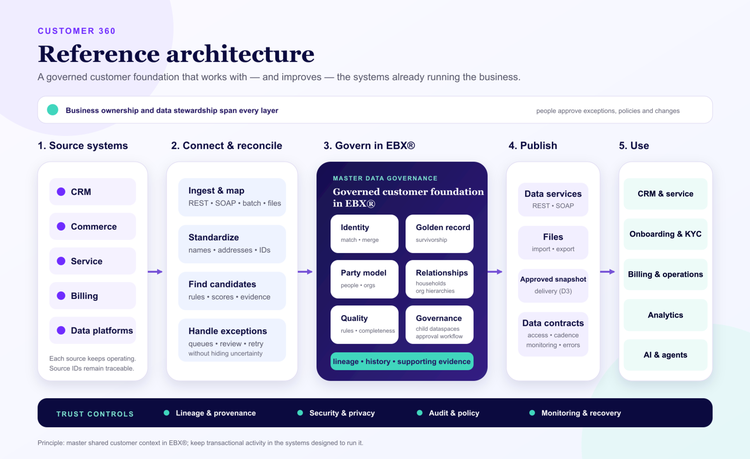
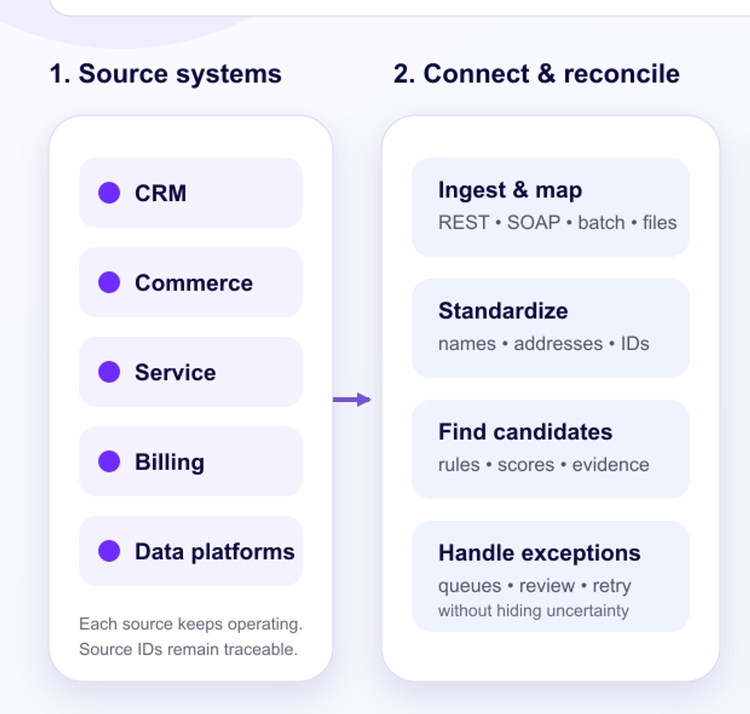
CRM, commerce, service, billing, onboarding and data platforms continue to run their business processes. The architecture receives customer records and source identifiers through configured data services, batch files and integration components.
The goal is coexistence: operational systems remain authoritative for their transactions while shared customer context is governed once.
Prepare identity before matching
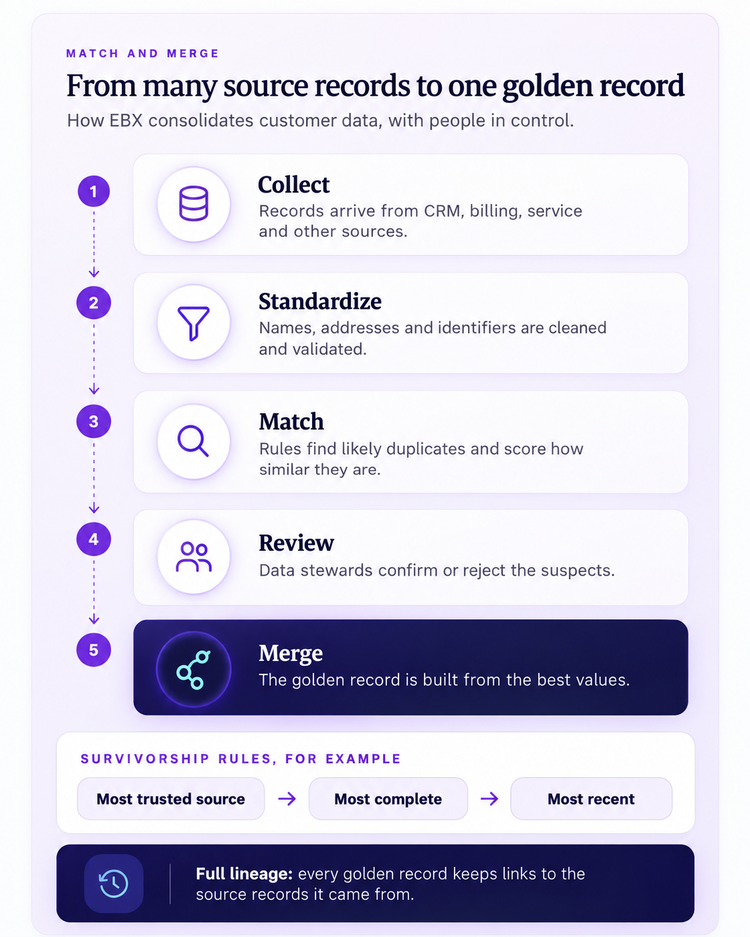
Names, addresses, phone numbers, email addresses and identifiers are parsed, standardized and validated. Configured Match and Merge strategies then identify likely duplicates, calculate similarity and retain evidence for review.
Confident matches can follow configured automation. Uncertain candidates enter a stewardship queue where people approve or reject the decision. Learn more about identity resolution.
Combine identity, relationships, quality and lineage
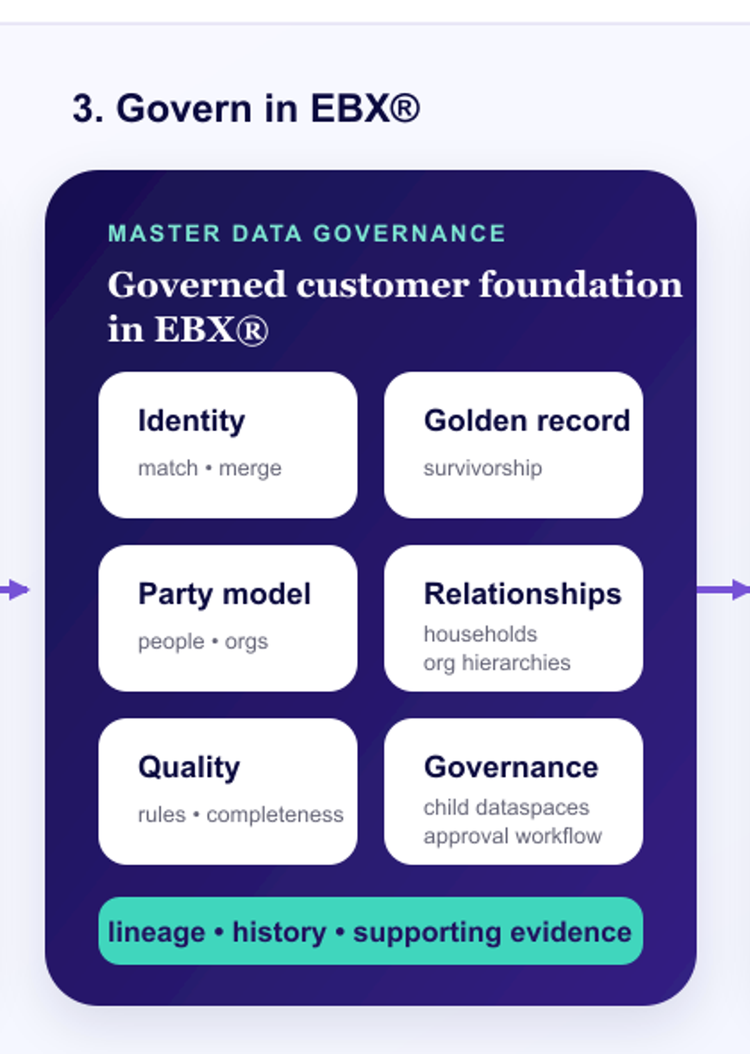
In EBX®, child dataspaces can separate work in progress from approved data. The governed layer manages customer and organization entities, golden records, households and corporate hierarchies alongside data-quality rules.
Workflow, permissions and history control review and promotion. Source links are preserved, survivorship is explicit and every controlled change is auditable.
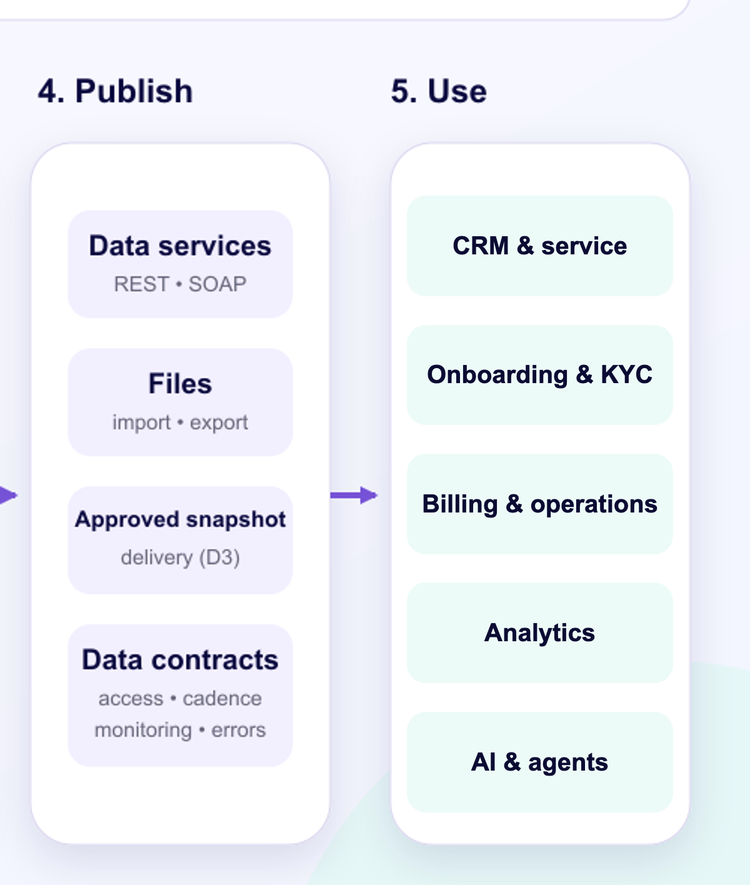
Publish trusted context into the flow of work
Approved customer records and governed relationships are exposed to CRM, service, billing, onboarding, analytics and AI through REST or SOAP data services, scheduled exports or controlled delivery configurations.
Consumers receive the context they need without becoming another uncontrolled master. Publication can be API-based, file-based or scheduled according to the use case and system capabilities.
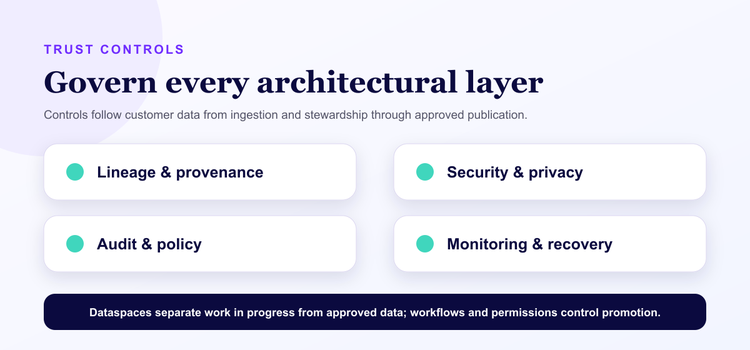
Make security, lineage and accountability architectural
Lineage and provenance, permissions and privacy, change history, quality monitoring and stewardship metrics are not add-ons. They apply from ingestion through approved publication.
This is what makes the architecture suitable for regulated processes and reusable enterprise decisions rather than a one-off consolidated view.
Keep exploring Customer 360
Go deeper into the parts of the architecture: the data model, matching, golden records and households.



Build a governed Customer 360 architecture with EBX®
Connect existing systems to trusted customer identity, relationships and evidence without replacing the applications that already run the business.
