
What are 360-degree customer views?


What a 360-degree view is built from
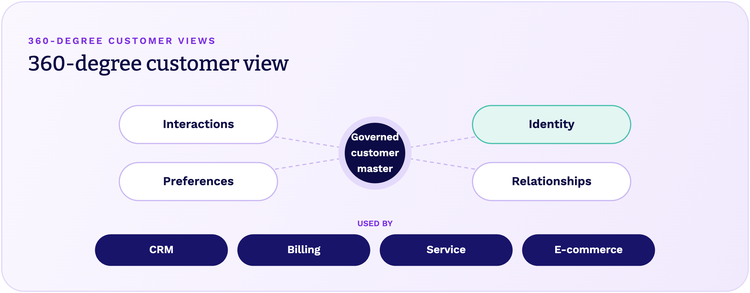
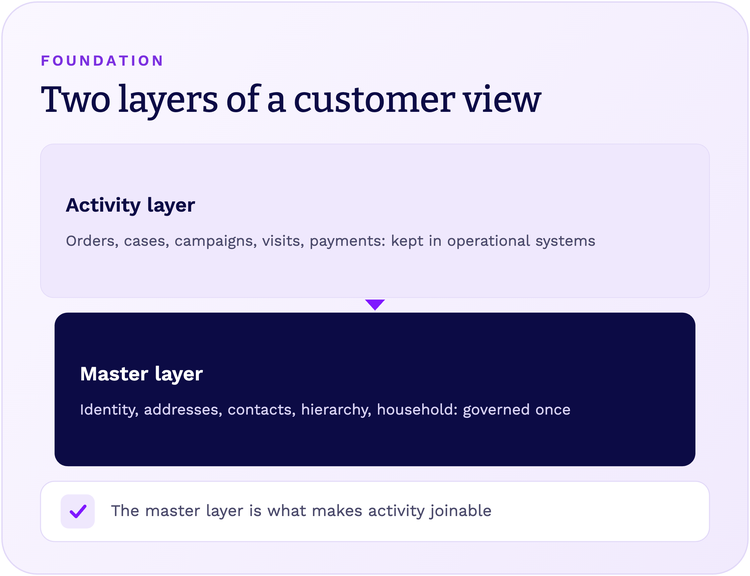
A customer view has two layers, and confusing them is the most common reason projects stall.
- The master layer answers who the customer is: legal name, identifiers, addresses, contacts, corporate hierarchy, household and segment. This changes slowly and must be the same everywhere.
- The activity layer answers what the customer does: orders, cases, campaigns, web visits and payments. This is high volume and stays in the systems that run those processes.
The master layer is what makes the activity layer joinable. Without one agreed identity per customer, interactions cannot be attached to the right person.
How organizations use a 360-degree customer view
- Consistent service. An agent sees the same customer, with the same history, whichever channel the customer uses.
- Coordinated selling. Sales, service and marketing work from one record, so a pitch can take account of an open complaint.
- Better forecasting. Analytics built on resolved customers count each customer once.
- Relevant engagement. Offers can reflect the customer's real relationship with the business rather than one system's partial view.
Why centralizing customer data is hard
Six problems come up in almost every program.
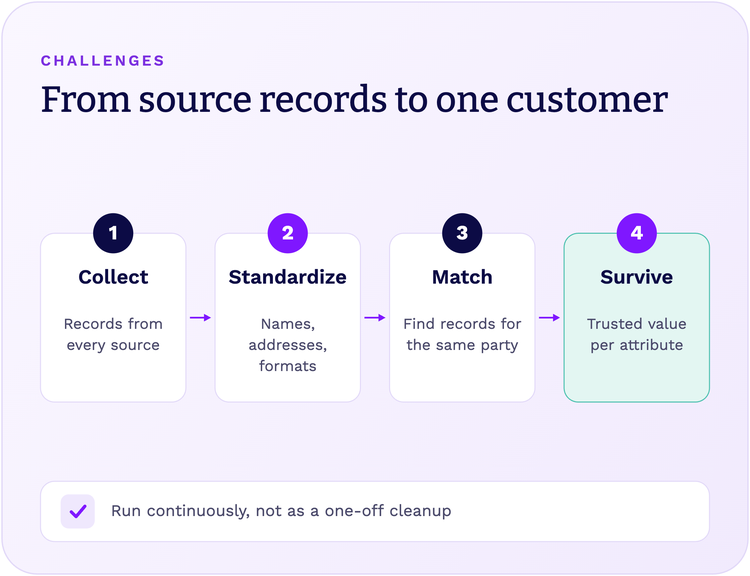
- Duplicates inside each source. Clean each system's duplicates before consolidating, or they multiply.
- No shared identifier. Records have to be matched on combinations of name, email, address and company.
- Conflicting values. Decide which source is trusted for which attribute, and when the most recent value wins.
- Inconsistent formats. Standardize addresses, dates and names against one agreed format before comparing them.
- Related objects. Contacts, accounts and households must keep their links when records are merged.
- Data that keeps moving. A one-off cleanup is out of date the day it finishes; matching and survivorship have to run continuously.
How EBX® supports a 360-degree customer view
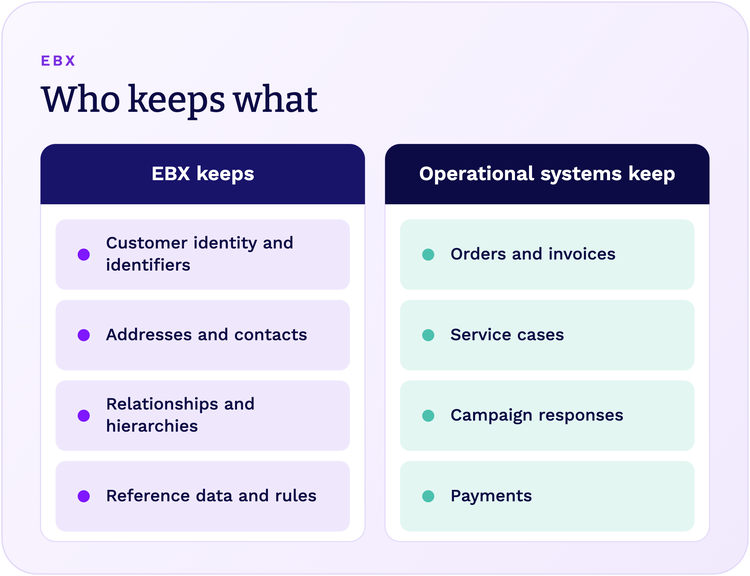
EBX® manages the master layer of the customer view: the governed customer, its identifiers, addresses, contacts, relationships and hierarchies, together with the reference data they depend on. Data models define what a valid customer is; workflows route new customers and changes to the right stewards; every change is kept in history; and the agreed record is published to CRM, billing, service and analytics through data services.
Operational systems keep their transactions. EBX keeps the shared customer definition they all rely on. For a deeper look, see the Customer 360 use case.
Frequently asked questions
Is a 360-degree customer view the same as a CDP?
No. A customer data platform focuses on behavioral and marketing data for activation. A 360-degree view built on master data management governs who the customer is, so every system, including a CDP, starts from the same identity.
Does a customer 360 mean copying all customer data into one system?
No. Transactions stay in the systems that run them. What is centralized is the governed customer identity and its relationships, which those systems then share.
Can the same approach be used for products or suppliers?
Yes. The same pattern, one governed master linked to activity in many systems, works for products, suppliers, locations and assets.
Build your customer view on governed data
Start with one trusted customer master, and give every system the same answer to "who is this customer?"
