
What is master data?


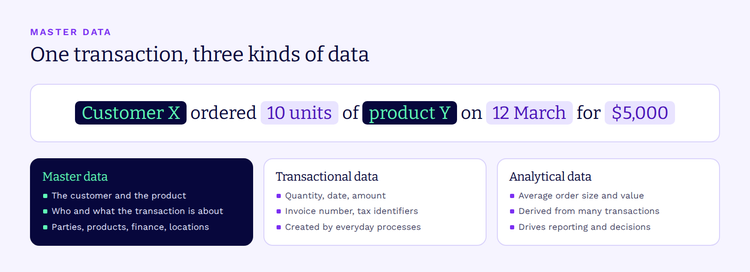
Master data, transactional data and analytical data
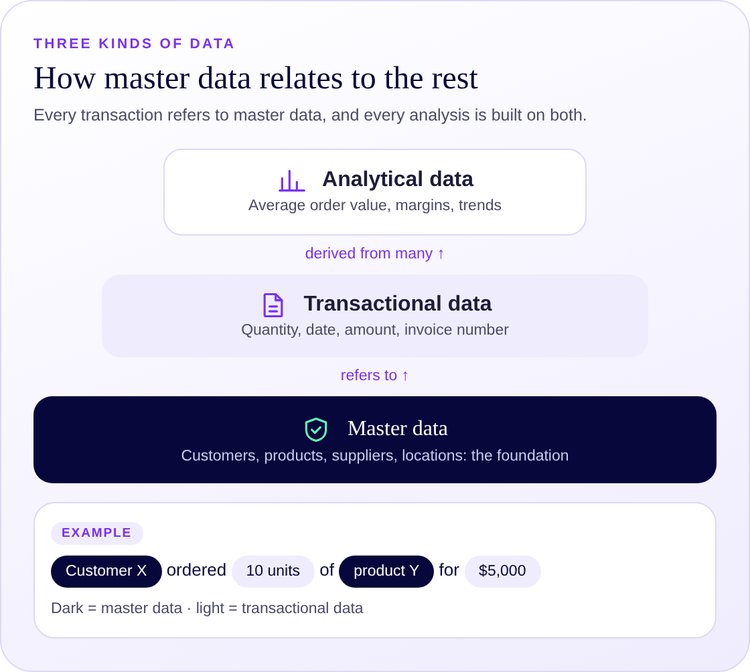
Most business data falls into one of three categories:
- Transactional data is generated by applications as they run everyday business processes.
- Analytical data comes from calculations and analyses run on transactional data.
- Master data describes the business objects those transactions are about, and the dimensions analysis is based on.
Take a simple transaction: Customer X ordered 10 units of product Y on 12 March for a total of $5,000. The customer and the product are master data: without them, the transaction would not exist. The amount, date, quantity, invoice number and tax identifiers are transactional data. The customer’s average order size and average order value, derived from many orders, are analytical data. All three are linked, and the business needs them to work together.
What counts as master data varies between industries, and even within them.
Master data is one of a company’s key assets. Some companies are acquired for their customer master data alone.
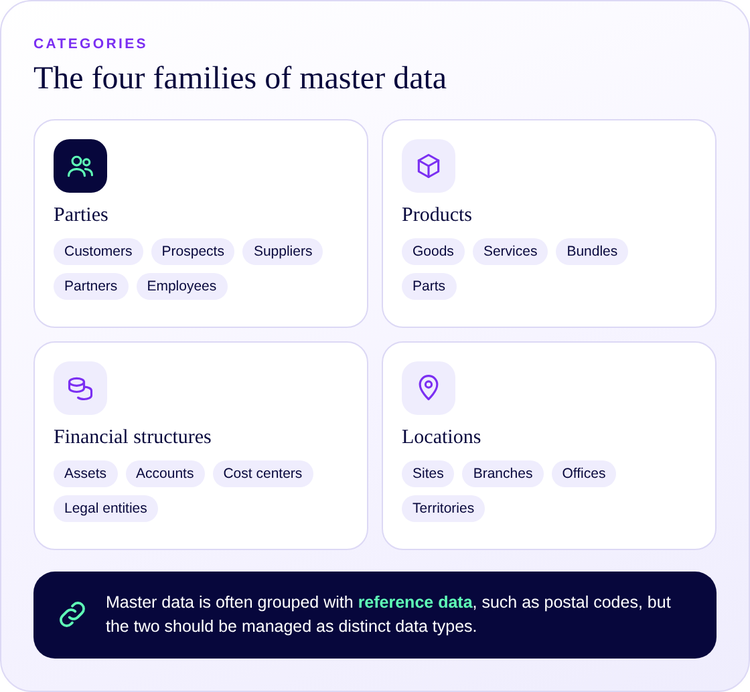
Categories of master data
- Parties: individuals and organizations, in all their roles: customers, prospects, suppliers, vendors, partners and employees.
- Products: the goods and services traded between parties.
- Financial structures: assets, accounts, cost centers and legal entities.
- Locations: sites, branches, offices and sales territories.
Many business processes and IT systems need the same master data, so formats must be standardized, values synchronized and the data governed.
Master data is usually non-transactional. The exception is when details about a party or product appear only on transactional documents, such as invoices and receipts, and are not recorded separately, as they should be. It is often grouped with associated reference data, such as the postal code in a customer’s address, but the two should be managed as distinct data types.
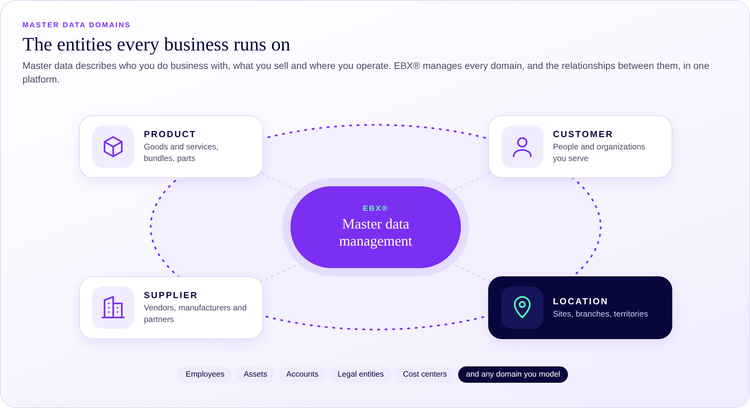
Master data management
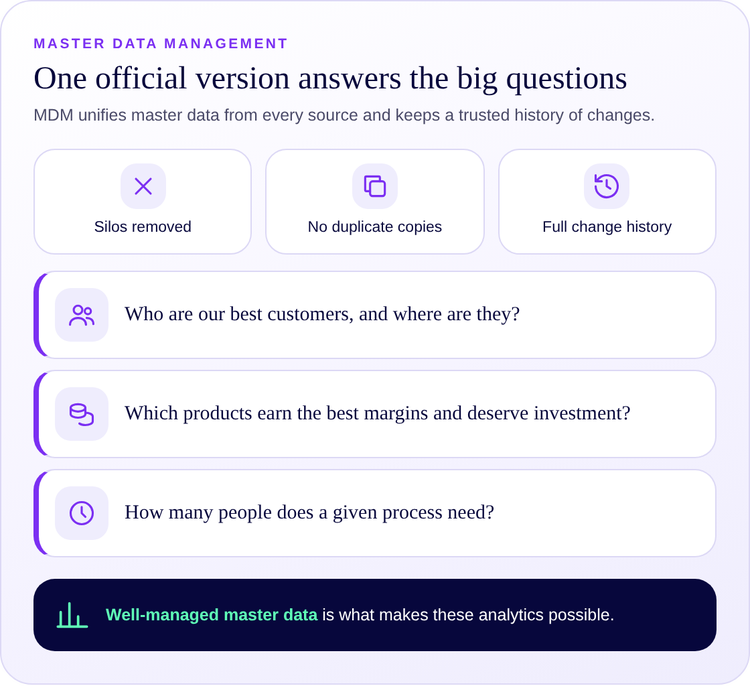
Master data management (MDM) covers the technology, tools and processes needed to unify and coordinate master data from every source across the organization. It maintains one official, shared version of master data that stays consistent, credible and accessible, removing silos, duplicate copies and manual errors, and keeping a trusted history of changes.
The field of MDM grew out of the central role master data plays in organizing and understanding operational data. Good MDM keeps core data clean and consistent over the long term, not just for one project.
Well-managed master data also makes analytics possible. It lets an organization answer questions such as:
- Who are our best customers, and where are they?
- Which products earn the best margins and deserve investment?
- How many people does a given process need?
Problems caused by unmanaged master data
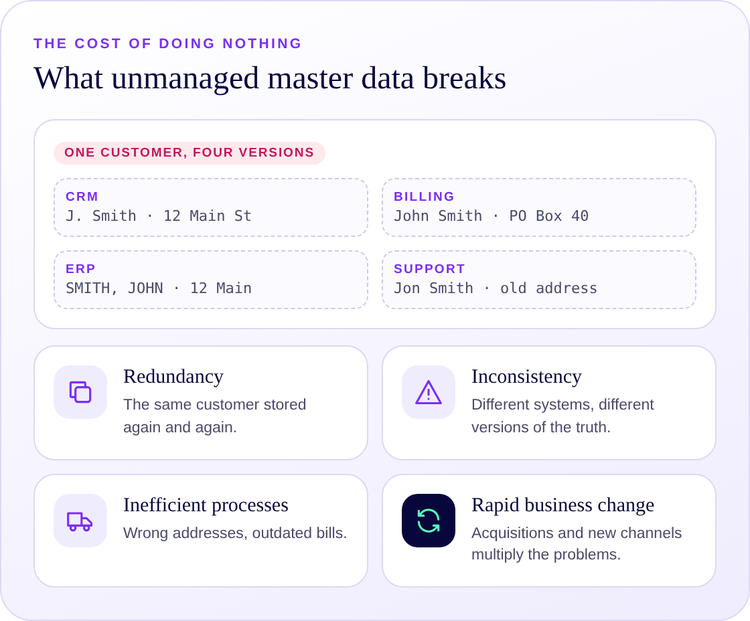
Redundancy
Each department keeps its own copy: sales in the CRM, finance in the accounting system. The same customer is stored again and again, raising costs and causing confusion.
Inconsistency
Manual entry errors and copies that drift apart leave different systems with different versions of the truth.
Inefficient processes
When order-to-ship, billing and other processes each use a different version of master data, items go to the wrong address and bills show outdated details.
Rapid business change
Acquisitions, new channels and new business models multiply every one of these problems.
The benefits of managing master data
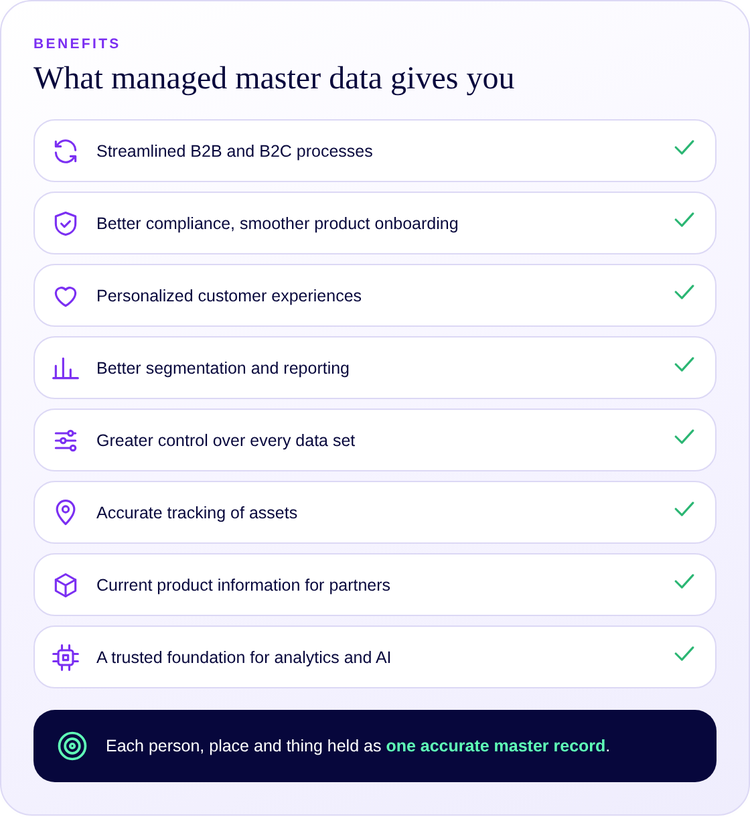
- Streamlined processes in both B2B and B2C organizations
- Better regulatory compliance and smoother product onboarding
- More personalized customer experiences, more sales and stronger relationships
- Better customer segmentation and reporting
- Greater control over every data set
- Accurate tracking of assets, their location, usage and maintenance
- Current product information for customers and trading partners
- A trusted foundation for analytics and AI
When each person, place and thing is held as one accurate master record, it becomes a dependable source of business-critical data for better decisions across the organization.
Manage master data with EBX®
Talk to our team about your master data goals, or explore how EBX® models, governs and shares master, reference and metadata in one platform.
