
What is a data silo?


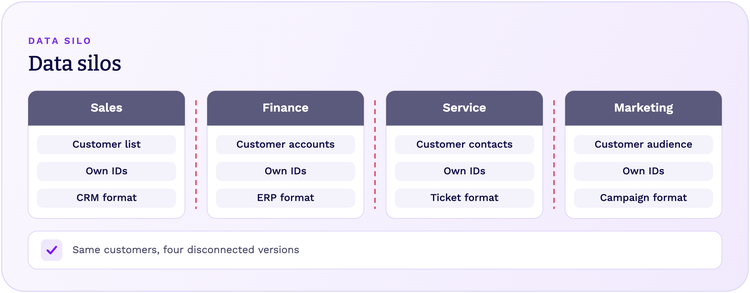
How data silos form
- Culture. Departments that work in isolation, or compete internally, have little reason to share.
- Structure. Organizations grow by adding business units and acquisitions, each with its own systems and definitions.
- Technology. Each team picks applications that fit its own work, and every application keeps its own copy of the customers, products and suppliers it needs.
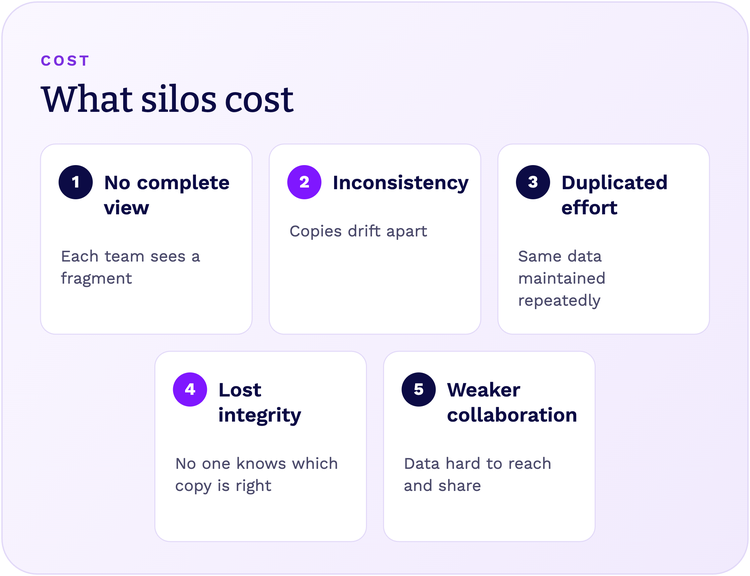
Why data silos are a problem
- No complete view. Each team sees only its own data, so connections, such as between a campaign and regional sales, go unnoticed.
- Inconsistent data. The same address or product is stored in different formats and drifts apart over time.
- Wasted effort and cost. Overlapping datasets are stored, cleaned and maintained several times over.
- Lost integrity. When copies disagree, nobody can say which is right.
- Weaker collaboration. Hard-to-reach data reinforces the habit of working alone.
How to break down data silos
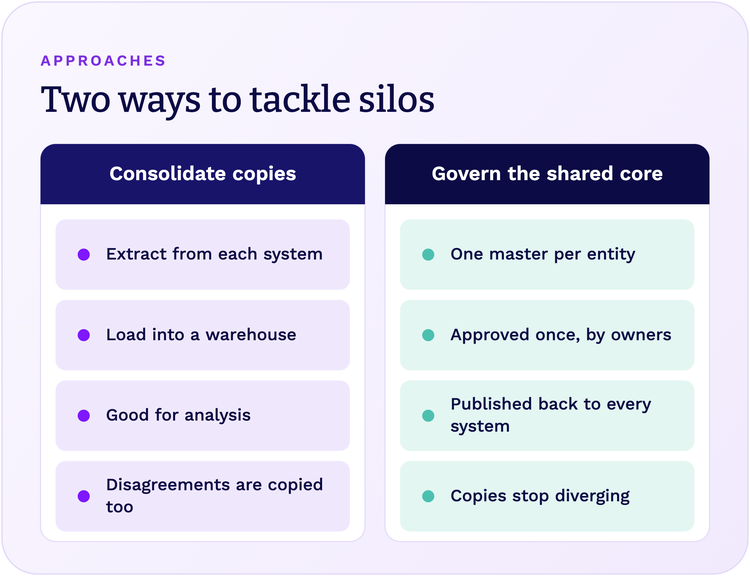
There are two complementary approaches, and most organizations need both.
- Consolidate for analysis. Copy data from each system into a warehouse or lakehouse, using scripts or integration tools, so it can be analyzed together.
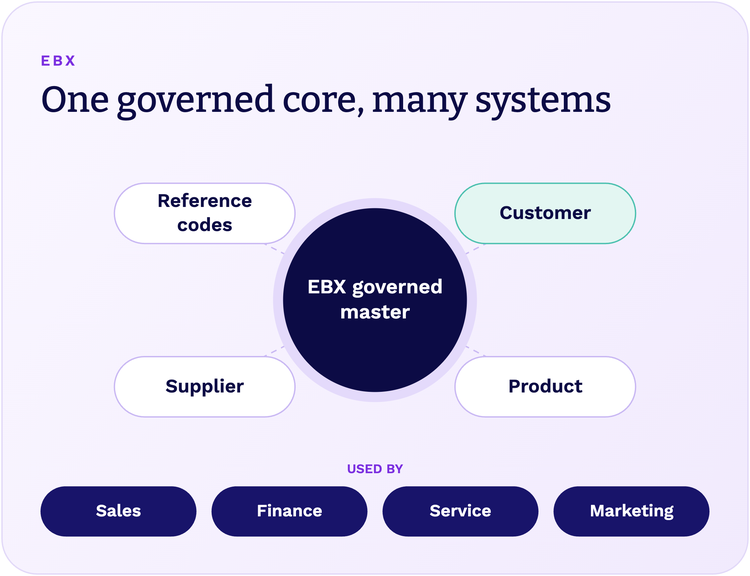
- Govern shared data at the source. For the entities every system shares, such as customer, product, supplier and reference codes, keep one governed master and publish it back to the operational systems, so the copies stop diverging in the first place.
Consolidation alone reproduces the disagreement in a new place. Governing the shared core removes it.
Silos are an organizational problem first
Technology removes the excuse for silos, but not the habit. Breaking them down also needs executive sponsorship, clear ownership of shared data, agreement on common definitions, and a focus on the few datasets with the highest business value rather than everything at once.
How EBX® helps remove data silos
EBX® provides one governed home for the data every silo shares: master data, reference data, hierarchies and metadata. Each domain has owners, validation rules and approval workflows, and the agreed records are published to consuming applications through data services. Teams keep their own applications, but they stop keeping their own versions of the truth.
Frequently asked questions
Is a data warehouse enough to remove data silos?
A warehouse makes siloed data available for analysis, but the operational systems keep their own copies. Governing shared data at the source stops those copies from disagreeing.
Are all data silos bad?
Not always. Some data is genuinely local to one team. Silos become a problem when the data is shared, such as customers or products, and each team keeps its own version.
Where should you start breaking down silos?
With the shared entity that causes the most reconciliation work, often customer or product, and a clear business owner for it.
Give every team the same shared data
Govern customer, product, supplier and reference data once, and publish it to every system that needs it.
