
Know who you buy from
Supplier information is often incomplete, inconsistent or spread across ERPs, procurement tools and spreadsheets. The same supplier is onboarded several times, bank details go out of date, certificates expire unnoticed, and nobody can see total spend or exposure across a supplier group.
EBX® creates a structured, governed view of suppliers and their risk data: controlled onboarding, one record per supplier, and traceable updates that every business unit can rely on.
The problem: one supplier, many vendor records
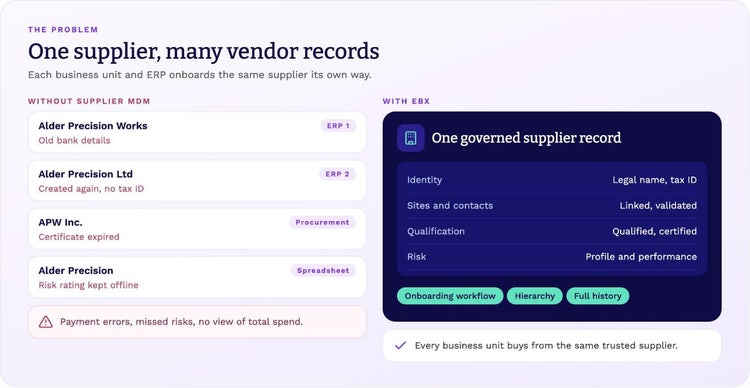
When each business unit and ERP onboards suppliers its own way, the same company ends up with several vendor records: one with old bank details, one created again without a tax ID, one with an expired certificate, and a risk rating kept in a spreadsheet.
The consequences are payment errors and fraud exposure, missed risks, weak negotiating positions, and no reliable view of how much you spend with a supplier group.
One governed list of suppliers
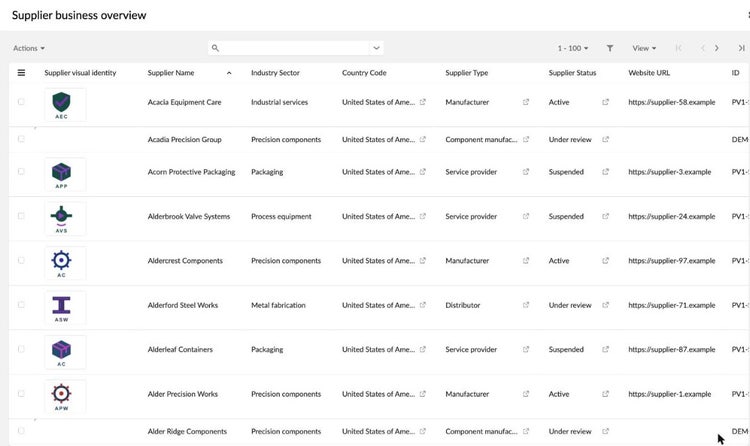
EBX holds one record per supplier, with its legal identity, industry, country, type and status, and links to its sites, contacts, contracts and materials. Procurement, finance and risk teams see the same list, with the same definitions.
Statuses such as active, under review or suspended are governed values, so a suspended supplier is suspended everywhere.
Controlled supplier onboarding
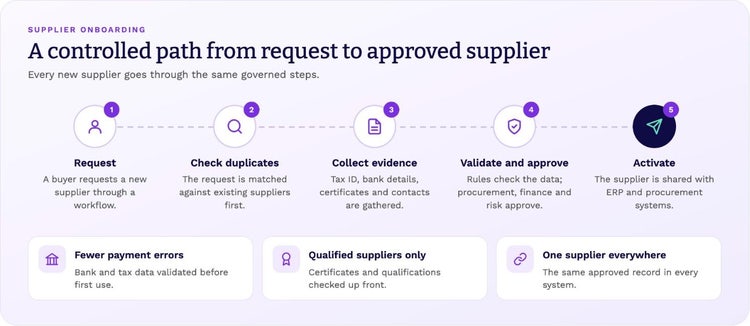
Every new supplier follows the same path. A buyer submits a request through a workflow, the request is checked against existing suppliers to avoid duplicates, and the required evidence, such as tax ID, bank details, certificates and contacts, is collected.
Validation rules check the data, procurement, finance and risk approve their part, and only then is the supplier activated and shared with ERP and procurement systems.
Qualified suppliers, and proof of it
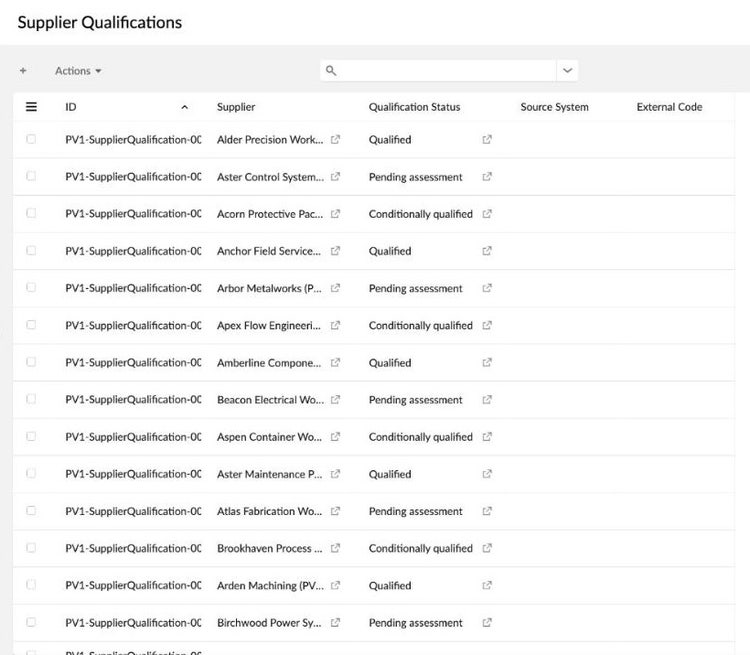
Qualification status is part of the supplier master data, not a separate list. Each supplier is qualified, conditionally qualified or pending assessment, and that status is visible to everyone who buys.
Approved vendor lists stay current because they come from the same governed records.
Third-party risk in one view
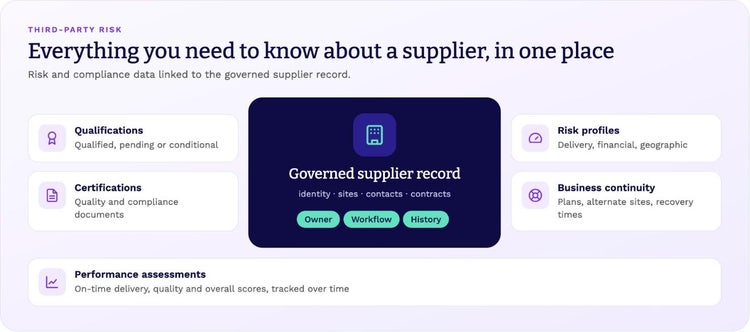
Risk teams need more than a name and an address. EBX links each supplier to its qualifications, certifications, risk profiles, business continuity plans and performance assessments.
Because this data sits on the governed supplier record, risk, procurement and finance all work from the same facts, and every update is traceable.
Risk and evidence on every supplier
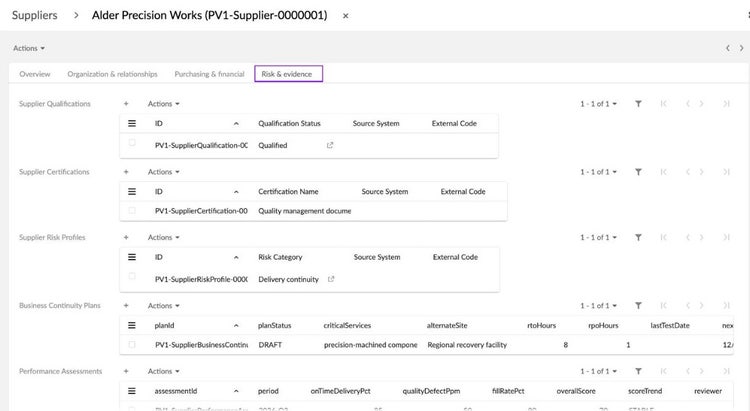
On each supplier record, a risk and evidence view brings together qualifications, certifications, risk categories, continuity plans with recovery objectives, and performance scores such as on-time delivery and quality.
When a certificate is renewed or a score changes, the record is updated once and the history shows who changed what, and when.
See the whole supplier group
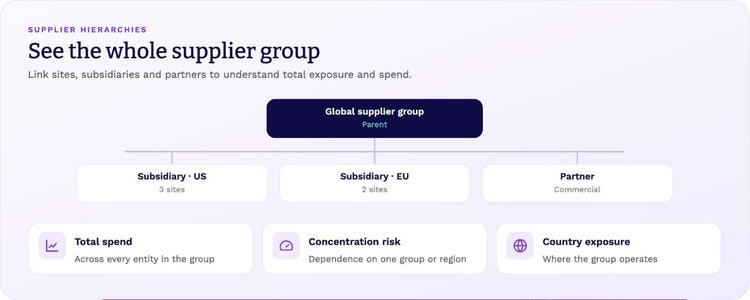
Suppliers are rarely single companies. EBX links parents, subsidiaries, sites and commercial partners into supplier hierarchies.
That gives you total spend across a group, a view of concentration risk when too much depends on one group or region, and visibility into where your suppliers operate.
Hierarchies managed as master data
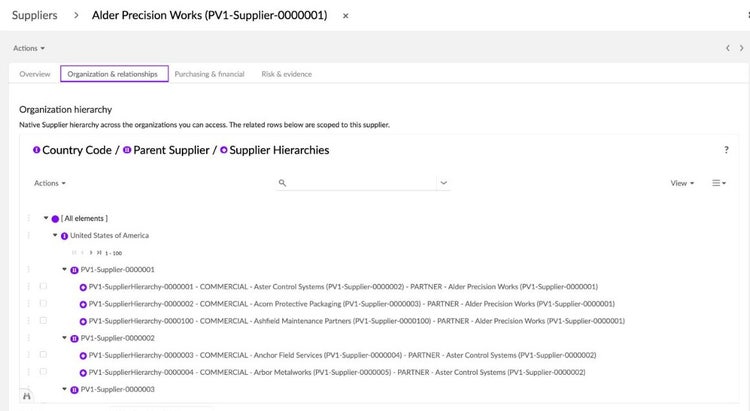
In EBX, supplier hierarchies are governed like any other master data: by country, by parent supplier and by relationship type, such as commercial partners.
Changes to the structure follow the same permissions and workflows, so the hierarchy that procurement analyzes is the one that finance and risk see too.
Supplier data management: common questions
What is supplier data management?
Supplier data management is the practice of keeping one trusted, governed record for each supplier, including identity, sites, contacts, bank and tax details, qualifications and risk data, and sharing it with every procurement and finance system. Learn more: What is master data?
How does EBX prevent duplicate suppliers?
New supplier requests are checked against existing suppliers before they are created, using matching rules on names, tax identifiers and addresses. Likely duplicates are flagged for review instead of being created again.
Can EBX manage supplier onboarding workflows?
Yes. Requests, data collection, validation and approvals by procurement, finance and risk teams can run through EBX workflows, with each step recorded in the supplier history.
How does EBX support third-party risk management?
Qualifications, certifications, risk profiles, business continuity plans and performance assessments are linked to the governed supplier record, so risk teams work from the same supplier data as procurement and finance.
Do we need to replace our ERP or procurement systems?
No. EBX governs the supplier master data and shares the approved record with ERP, procurement and payment systems, which keep running as before. Learn more: What is master data management?
Build a supplier base you can trust
Talk to our team about supplier onboarding, third-party risk and supplier hierarchies, or explore how EBX® models, governs and shares master data, reference data and metadata in one platform.
